Feature Flags vs Configuration Files: Choosing the Right Approach for Dynamic Application Control

Modern application development requires flexibility in how we control feature releases and application behavior. Two common approaches are traditional configuration files (web.config for .NET Framework or appsettings.json for .NET Core/.NET) and dynamic feature flags. While both can control application behavior, they serve fundamentally different purposes and offer distinct advantages depending on your needs.

Continue reading

Guide to Cost-Efficient Azure SQL Database + App Service Setup

An opinionated guide based on real-world production experience

The $$$$$/Year Mistake Most Developers Make

Here’s a scenario that plays out constantly: You’re building a mobile app or web API (or XAF Blazor). You choose Azure App Service (great choice) and Azure SQL Database (also great). You read about “serverless” databases that “auto-scale” and “only charge for what you use.” Sounds perfect, right?

Wrong.

I’ve seen this exact pattern cost developers 2-3x what they should be paying, all while dealing with mysterious timeout errors and frustrated users. Let me show you how to avoid this trap.

Continue reading

Building Robust Bluetooth Low Energy (BLE) Mobile Applications: Our Learnings

Bluetooth Low Energy (BLE) has become the standard for mobile device-to-hardware communication, powering everything from fitness trackers to medical devices. However, building a reliable BLE mobile application requires understanding platform-specific quirks, connection management strategies, and robust error handling. This guide synthesizes real-world lessons from production BLE implementations.

Continue reading

WiFi Provisioning for IoT Devices: Learnings from our last mobile app.

WiFi provisioning—the process of configuring an IoT device to connect to a user’s home network—is one of the most critical yet challenging aspects of IoT product development. What appears simple (connect device to WiFi) involves navigating a maze of platform restrictions, security requirements, network edge cases, and user experience challenges.

This article explores the complete landscape of WiFi provisioning, covering technical approaches, platform-specific limitations, and real-world solutions.

Continue reading

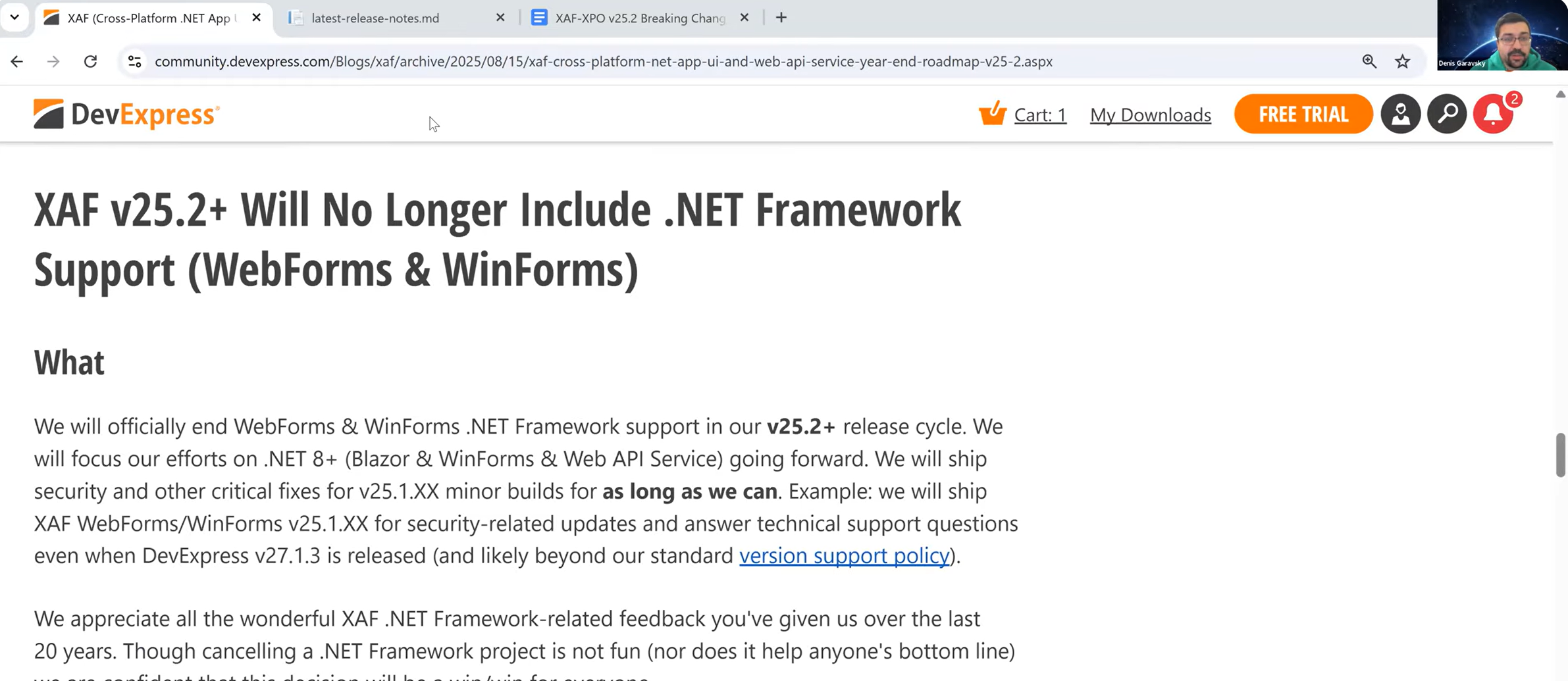
XAF v25.2 – End of .NET Framework, Legacy Module Removal & The Future of XAF Development

The XAF team has officially confirmed a major architectural milestone: starting with XAF v25.2, support for .NET Framework applications is fully discontinued, and several legacy APIs, modules, and subsystems have been removed from the framework’s source code.

If you have XAF applications in production — especially those based on WinForms (.NET Framework) or ASP.NET WebForms — this is a critical shift to understand. This article breaks down what changed, why it changed, the impact, and how to migrate forward successfully.

Continue reading